With unemployment on the rise in South Africa, many more communities are falling deeper into poverty and are turning to poaching in community and state-owned nature reserves where management resources are limited. Most of this poaching is done by poachers placing snares (wires which form nooses to catch animals) in strategic locations in reserves. These snares are able to catch anything from small animals such as mongoose and porcupine all the way up to small elephants. Very often poachers place many snares at once and then forget where they have placed them, which means that animals which are caught in them face a long, brutal and agonising death. Alternatively, some animals break the snares off of their anchor points and these wires get stuck on their legs or on the trunks of elephants, which cuts off blood supply to rest of the limb.
One key area which has been overwhelmed with snares is the Letaba Ranch Nature Reserve in the Limpopo Province. Letaba Ranch is a 40 000 ha nature reserve which shares an open border with the Kruger National Park to the East. The reserve has literally lost hundreds of animals to snaring syndicates in the area and conservation agencies are working hard to clear the snares up and catch poachers. This requires ongoing resources such as helicopter sweeps, ground patrols and placing collars on strategic animals to monitor their movements.
Albus Environmental has a long history of providing support to emergency wildlife interventions in South Africa. This has included the translocation of large elephant bulls with unique genetics to safe reserves and also translocating orphaned rhinos to reserves where they are being protected on an ongoing basis. Furthermore, Albus has provided tracking collars for these animals to allow the management teams of their new reserves to be able to monitor them effectively and manage their wellbeing. As a company, Albus Environmental believes that the protection of threatened and endangered species in South Africa is a global problem and more private companies need to be part of the solution.
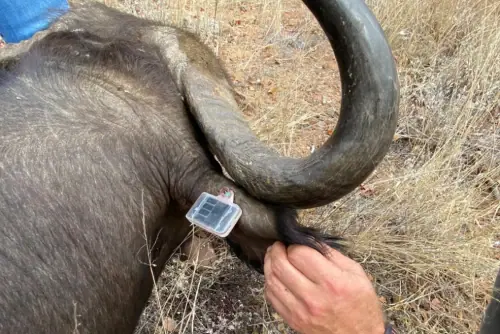
Therefore, Albus decided to make a direct contribution to assisting in managing the snaring problem in Letaba Rance during June of 2025. This support included two phases. The first phase was to conduct a snare sweep with a helicopter to determine if there were any animals in Letaba Ranch which had visible snares so that the vet in the helicopter could dart the relevant animals, remove the snare and provide treatment. As part of this phase, the team found four snared buffalo and successfully removed these snares and at the same time placed tracking collars on the buffalo. The snares were horrific and the buffalo would have died a long brutal death if this intervention did not take place. Tracking the buffalo allows the team to monitor their movements and also predators which follow them. This enables the management team to effectively check on snaring on an ongoing basis.
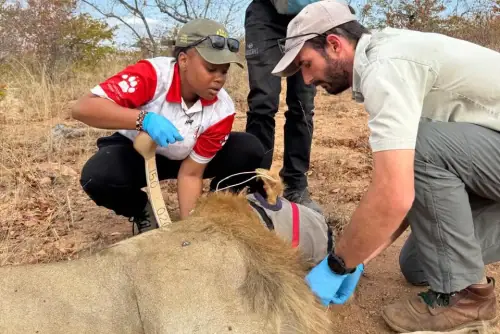
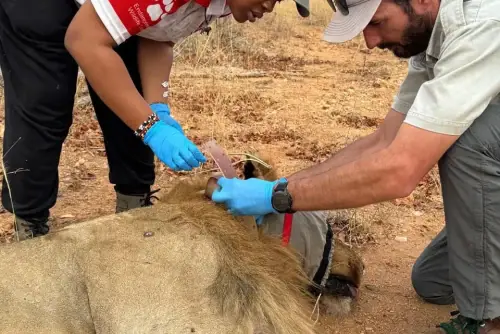
The second phase of the project included the successful collaring of two male lions which have territories in Letaba Ranch. Albus Environmental provided the helicopter hours to make this collaring possible. The collars on these lions now makes it possible for the ground teams to check up on the lions, their movements and also to visit their kills/feeds as these could often be animals which were caught in snares, providing valuable insight into areas which area high snare areas.
Therefore, although Albus assisted in the rescue and collaring of four buffalo and the collaring of two lions, this intervention could lead to the monitoring and rescue of many more animals into the future. This reserve desperately needs assistance and without support such as that provided by Albus Environmental, the future looks dire.
This project was proudly implemented in partnership with the Wildlife Emergency Fund, in collaboration with the Endangered Wildlife Trust who are actively monitoring the reserve, Hope for Wildlife Helicopter Services, South African National Parks and Wildscapes Veterinary Services. We are proud to say that our partners on the ground successfully arrested a poacher recently by monitoring animal movements and using camera traps.
Albus Environmental remains committed to the ongoing protection of endangered species throughout Africa and we aim to ramp up our efforts with the Wildlife Emergency Fund. Our sustainability policy is that we as private sector need to play an active role in the protection of our global heritage.